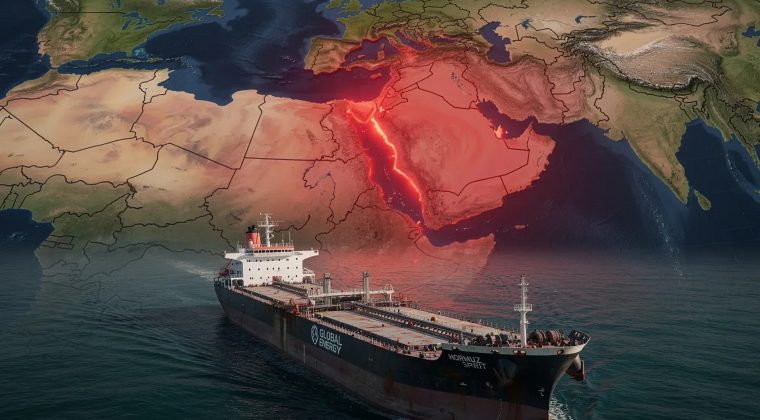
*Crude remains elevated with Brent Crude near $103 and West Texas Intermediate around $100, as severe disruptions at the Strait of Hormuz choke global supply flows.
*Attacks on vessels and export shutdowns across Gulf producers have removed millions of barrels from the market, creating one of the largest supply shocks in recent history.
*Prolonged Hormuz closure could push crude toward $140–$150, while de-escalation or strategic reserve releases may pull prices back toward $80.
Market Summary:
Crude oil markets opened the week with a gap higher on renewed fears over the ongoing U.S.-Israeli conflict with Iran and sustained disruptions in the Strait of Hormuz, though prices have since moderated amid profit-taking and incremental supply-side developments. Brent crude currently trades in the $103 per barrel range, while WTI hovers near $100, retreating from intraday March highs above $100-$110 but still holding 30-40 percent above pre-conflict levels near $70-$75 in late February.
The conflict, now entering its third week since U.S.-Israeli strikes began on February 28, has severely disrupted global oil flows. The Strait of Hormuz—through which approximately 20 percent of global oil transits—has seen shipping activity plummet to roughly five vessels daily from a normal average of 138, with attacks, mines, and Iranian threats halting much of the traffic. Iran’s new Supreme Leader has vowed to keep the strait closed as leverage, while Islamic Revolutionary Guard Corps statements emphasize blocking oil exports. Gulf producers including Saudi Arabia, the UAE, Iraq, and Kuwait have shut in millions of barrels daily as storage fills and exports stall, marking one of the largest supply shocks in history with cascading effects including soaring tanker rates and halted passages by major shippers.
OPEC+ agreed to a modest 206,000 barrel-per-day increase starting April, far smaller than some proposals, while maintaining high compliance on prior cuts. U.S. inventories provided a short-term buffer, with the EIA report for the week ending March 6 showing crude stocks built by 3.8 million barrels, above expectations. Demand-side pressures are emerging as higher prices weigh on global growth—China has implemented refinery cuts—while inflation risks could delay anticipated rate cuts. Non-OPEC supply growth from the U.S. and Guyana may offer later relief.
Near-term volatility persists with a significant risk premium embedded. Prolonged closure of the Strait of Hormuz could push prices toward $140-$150, while a swift de-escalation or full-scale reserve releases might see retreat toward the $80 level. Markets remain headline-driven, with participants monitoring Hormuz shipping updates, the next OPEC+ meeting scheduled for April 5, and the upcoming EIA release on March 18.
Technical Analysis
WTI Crude , H4:
Oil markets have experienced extreme volatility over the past month, surging more than 26 percent to a multi-year high before retreating sharply by over 30 percent from the recent peak. This whipsaw action reflects the market grappling with unprecedented supply disruptions from the Middle East conflict against demand-side concerns and profit-taking.
Despite a gradual upward drift in recent sessions, prices have yet to clear the critical 50 percent Fibonacci retracement level at $100.20. This threshold represents a pivotal technical juncture—a sustained breakout above this level would signal that the corrective phase has concluded and the broader uptrend is resuming. Failure to breach this resistance keeps oil within its broader bearish trajectory, vulnerable to renewed downside pressure.
Momentum indicators are showing constructive signs. Both the Relative Strength Index and Moving Average Convergence Divergence are gradually trending higher, suggesting that bullish momentum is building beneath the surface. This developing positive momentum, if sustained, could provide the necessary impetus for a challenge of the $100.20 resistance in the near term. Traders should monitor price action at this level closely for evidence of either a decisive breakout or a rejection that would reaffirm the prevailing bearish bias.
Resistance Levels: 111.00,119.50
Support Levels: 88.60, 80.30
Start trading with an edge today
Trade forex, indices, metal, and more at industry-low spreads and lightning-fast execution.
Start trading with deposits as low as $50 on our standard accounts.
Get access to 24/7 support.
Access hundreds of instruments, free educational tools, and some of the best promotions around.
Important Notice: Please note the Website is intended for individuals residing in jurisdictions where accessing the Website is permitted by law.
Please note that PU Prime and its affiliated entities are neither established nor operating in your home jurisdiction.
By clicking the "Acknowledge" button, you confirm that you are entering this website solely on your own initiative and not as a result of any specific marketing outreach. You wish to obtain information from this website which is provided on a reverse solicitation basis in accordance with the laws of your home jurisdiction.
Please note the Website is intended for individuals residing in jurisdictions where accessing the Website is permitted by law.
Please note that PU Prime and its affiliated entities are neither established nor operating in your home jurisdiction.
By clicking the "Acknowledge" button, you confirm that you are entering this website solely based on your initiative and not as a result of any specific marketing outreach. You wish to obtain information from this website which is provided on reverse solicitation in accordance with the laws of your home jurisdiction.
Ten en cuenta que el sitio web está destinado a personas que residen en jurisdicciones donde el acceso al sitio web está permitido por la ley.
Ten en cuenta que PU Prime y sus entidades afiliadas no están establecidas ni operan en tu jurisdicción de origen.
Al hacer clic en el botón "Aceptar", confirmas que estás ingresando a este sitio web por tu propia iniciativa y no como resultado de ningún esfuerzo de marketing específico. Deseas obtener información de este sitio web que se proporciona mediante solicitud inversa de acuerdo con las leyes de tu jurisdicción de origen.